Designed to Rust: Why Environmental Corrosion Factors Are Being Engineered Out of Sight — and Into Your Maintenance Budget
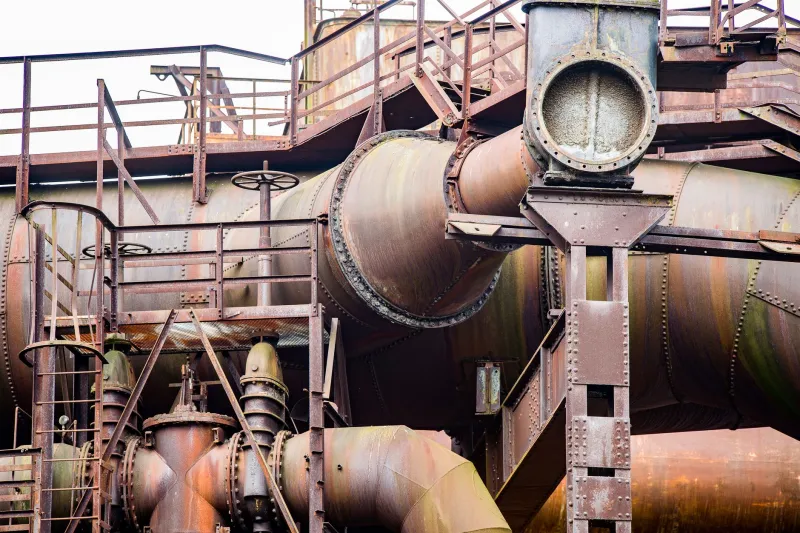
There is a particular kind of financial pain that plant managers know well: the equipment that should have lasted twenty years replaced at twelve. The pump housing that developed pitting corrosion nobody anticipated. The structural support that passed every load calculation but failed because someone forgot to account for the chemical mist drifting across the facility floor every shift.
Corrosion is not a maintenance problem. It is, at its root, an engineering problem — and the distinction matters enormously for how US industrial operations allocate resources, plan capital expenditures, and design for the environments their equipment actually inhabits.
According to estimates from NACE International (now AMPP), corrosion costs the US economy more than $270 billion annually across industrial sectors. A significant portion of that figure is attributable not to unavoidable electrochemical processes, but to design decisions that failed to account for the operational environment from the outset.
The Design Phase Blind Spot
When engineering teams develop specifications for new industrial equipment or facility infrastructure, their focus is naturally drawn to mechanical performance — load ratings, cycle frequencies, dimensional tolerances, and thermal thresholds. These are measurable, testable, and immediately verifiable against standards.
Environmental corrosion factors, by contrast, are slower to manifest and easier to rationalize away during the design review. The result is a systematic blind spot: components are specified for their structural properties without adequate consideration of what the surrounding atmosphere, process chemicals, humidity levels, or cleaning agents will do to them over time.
This is not a failure of engineering knowledge. Corrosion science is well-established. It is, more precisely, a failure of engineering process — specifically, the absence of a formalized environmental compatibility review as a standard step in industrial design validation.
Material Compatibility Is Not a Checkbox
One of the most persistent misconceptions in industrial design is that selecting a corrosion-resistant material is sufficient protection against environmental degradation. In practice, material compatibility analysis must be considerably more granular.
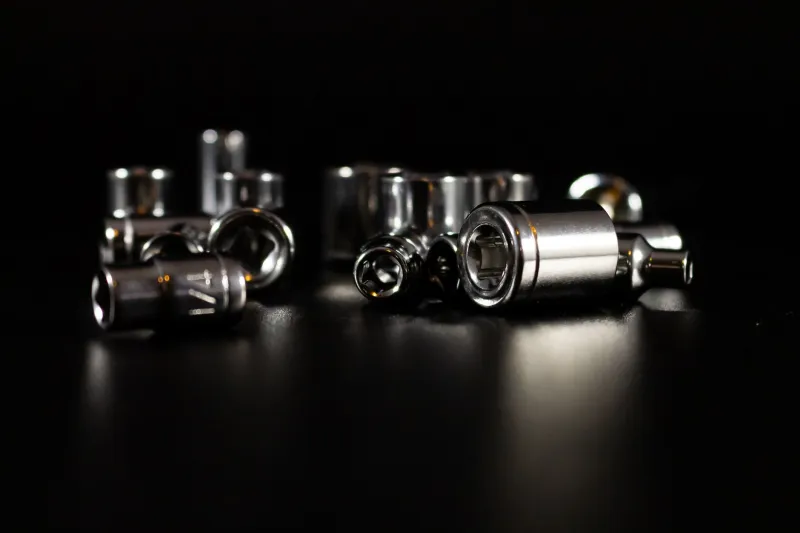
Consider a stainless steel component installed in a food processing facility. Grade 304 stainless performs admirably in many applications, but in environments where chlorinated sanitizing agents are used regularly — a near-universal reality in US food and beverage plants — chloride-induced stress corrosion cracking becomes a genuine risk. Grade 316 or 316L, with its molybdenum content, is far better suited to that specific chemical exposure. The cost difference between the two is modest. The cost difference between planned material specification and an unplanned component failure mid-production run is anything but.
Similar logic applies across industries. Carbon steel in a coastal petrochemical facility faces a fundamentally different corrosion regime than the same material in an inland dry-goods warehouse. Aluminum alloys that perform reliably in aerospace applications may exhibit galvanic corrosion when paired with dissimilar metals in a marine-adjacent industrial environment. The material itself is rarely the complete answer — the interaction between material, mating components, process chemistry, and ambient conditions is where the real engineering work must be done.
Coating Specifications: Where Good Intentions Frequently Fall Short
Protective coatings represent one of the most widely used strategies for extending equipment lifespan in corrosive environments — and one of the most frequently under-engineered. The problem is not typically with the coating technology itself, which has advanced substantially over the past two decades. The problem lies in how coating specifications are developed and communicated.
Coating systems must be matched to the specific corrosion mechanisms present in a given environment. An epoxy coating appropriate for a general industrial atmosphere may be wholly inadequate in a facility where sulfur compounds, strong acids, or elevated temperatures are present. Zinc-rich primers, fluoropolymer topcoats, thermal spray coatings, and ceramic-based systems each address different threat profiles — and applying the wrong system can create a false sense of protection that accelerates failure rather than preventing it.
Beyond selection, surface preparation standards are equally critical. A premium coating applied over inadequate surface preparation will fail prematurely regardless of its chemical resistance properties. SSPC and NACE surface preparation standards exist precisely because the adhesion and long-term performance of any protective system is only as reliable as the substrate it bonds to.
Engineering specifications that simply call for "a corrosion-resistant coating" without defining the coating system, application method, dry film thickness, and surface preparation standard are, in practical terms, incomplete specifications.
Designing for the Environment, Not Against It
Beyond material selection and coating systems, protective design strategies can significantly reduce a facility's overall corrosion burden. These approaches address the environmental conditions themselves — or the geometry of components exposed to them — rather than relying solely on material resistance.
Drainage geometry is one frequently overlooked factor. Components and structural members designed with flat horizontal surfaces or recessed pockets create standing water accumulation points that dramatically accelerate localized corrosion. Designing for drainage — incorporating slopes, drain holes, and smooth transitions — eliminates these accumulation zones without adding material cost.
Ventilation design in enclosed equipment enclosures can prevent the condensation cycles that drive corrosion in electrical and mechanical control systems. Specifying sealed enclosures with appropriate IP ratings for the humidity and chemical exposure levels present in a facility is a straightforward engineering decision that prevents a disproportionate share of corrosion-related failures.
Similarly, the deliberate isolation of dissimilar metals through the use of non-conductive gaskets, isolation flanges, or dielectric fittings is a well-understood engineering control for galvanic corrosion — yet it is routinely omitted from designs where the cost implications of the resulting failures were never properly modeled.
The Economics of Getting This Right at the Design Stage
The financial case for integrating corrosion engineering into the design process is straightforward. Addressing material compatibility, coating specifications, and protective geometry during the design phase costs a fraction of what it costs to correct those decisions after equipment is installed and degrading.
For US manufacturers operating in competitive markets where unplanned downtime carries significant production cost implications, the calculus is particularly compelling. A structured environmental design review — conducted before specifications are finalized — that identifies corrosion risks and implements appropriate mitigation strategies can extend equipment service life by years, reduce maintenance labor and parts expenditure, and eliminate the category of failure that is most difficult to explain to a capital budget committee: the asset that failed because nobody thought to ask what environment it would actually be operating in.
Corrosion does not conspire against industrial operations. It simply follows the laws of chemistry with complete indifference to engineering assumptions that were never tested against reality. The manufacturers that understand this — and build environmental rigor into their design process accordingly — are the ones whose equipment keeps running long after their competitors are writing purchase orders for replacements.
At Apex Engineering Solutions, we work with industrial clients across the US to identify and address environmental design vulnerabilities before they become operational liabilities. If your facility is experiencing premature equipment degradation, the answer may lie not in better maintenance — but in better engineering.