Drowning in Numbers, Starving for Answers: Why American Manufacturers Are Failing to Turn Production Data Into Competitive Power
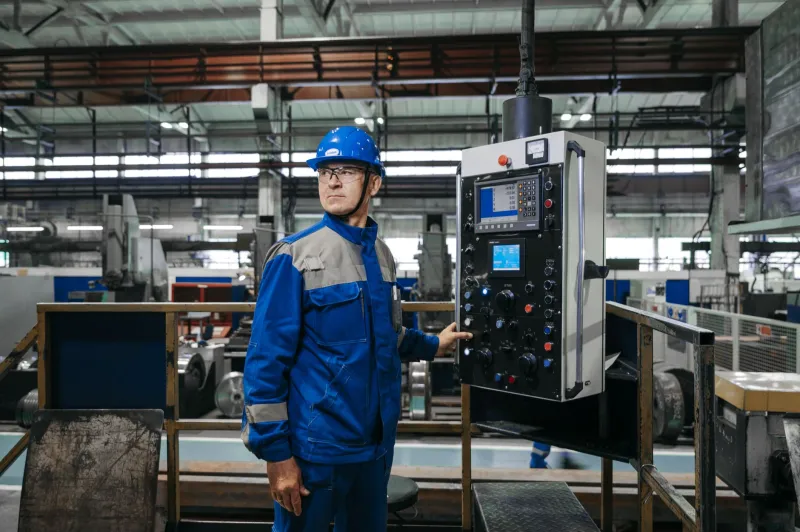
There is a particular kind of frustration familiar to plant engineers and operations managers across the United States. Dashboards display thousands of data points in real time. Historians log sensor readings around the clock. SCADA systems, PLCs, and ERP platforms generate reports that stack up faster than any team can reasonably review. And yet, when a critical piece of equipment fails unexpectedly on a Tuesday morning, the honest question that follows is almost always the same: Why didn't we see this coming?
The answer is rarely a shortage of data. It is almost always a shortage of intelligence.
The Illusion of Visibility
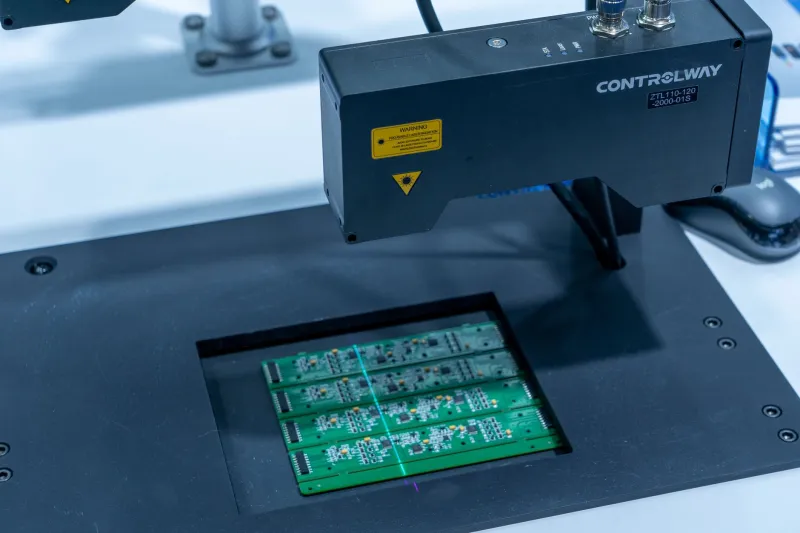
Modern industrial facilities have made extraordinary investments in instrumentation. Vibration sensors, thermal imaging arrays, flow meters, pressure transducers, and power quality monitors collectively produce a continuous stream of operational information. On the surface, this looks like comprehensive visibility. In practice, it frequently amounts to sophisticated noise.
The problem is structural. Data collection infrastructure and data analysis capability have not evolved at the same pace. Sensors were installed to satisfy compliance requirements, to fulfill equipment warranty conditions, or to support manual spot-checks. The systems that gather this information were rarely designed with predictive analytics or cross-system correlation in mind. As a result, manufacturers end up with vast archives of historical readings that sit largely unexamined — not because no one cares, but because no practical framework exists to extract meaning from them at scale.
This is the illusion of visibility: the belief that instrumentation alone constitutes insight.
Where the Intelligence Gap Opens
Consider a mid-sized metal fabrication facility running three shifts. The facility logs motor current draw, ambient temperature, cycle times, reject rates, and a dozen other variables across its primary production lines. Each dataset, viewed in isolation, appears unremarkable. Current draw looks normal. Cycle times fall within acceptable ranges. Reject rates fluctuate but stay beneath the threshold that would trigger a formal review.
What goes undetected is the pattern that exists across these variables. A gradual 4% increase in motor current draw, combined with a subtle uptick in cycle time variance and a modest rise in ambient temperature near a specific bearing assembly, may together constitute a clear early warning of imminent failure. Individually, none of these signals crosses an alarm threshold. Together, they tell a precise and urgent story.
Without the analytical infrastructure to correlate these streams — and without personnel trained to interpret multivariate patterns rather than single-point alarms — that story goes unread until the equipment stops.
The Human Factor in Data Blindness
It would be convenient to frame this purely as a technology problem, but that framing is incomplete. Many US manufacturers have access to capable analytics platforms. The more persistent barrier is organizational: the cultural and procedural habits that govern how data is used — or not used — in day-to-day decision-making.
In many facilities, production data flows to engineers who are already managing full workloads. Reviewing trend analyses or building predictive models competes directly with responding to immediate operational demands. Urgency wins. The analytical work that could prevent tomorrow's crisis loses to the tactical demands of today's production schedule.
Furthermore, there is often a meaningful disconnect between the personnel who understand the engineering significance of data patterns and those who have authority to act on them. Insights generated at the technician level may not surface to decision-makers in a form that prompts action. Conversely, executives reviewing high-level KPI summaries may have no visibility into the granular signals that carry the most predictive value.
Closing the Gap: What Operational Intelligence Actually Requires
Transforming raw production data into actionable engineering intelligence is not a single-step initiative. It requires deliberate work across three interconnected dimensions.
Data architecture. Before analytics can function effectively, the underlying data environment must be rationalized. This means establishing consistent tagging conventions, resolving timestamp misalignments between systems, and creating data pipelines that allow information from disparate sources — PLC outputs, maintenance records, environmental sensors — to be analyzed in combination rather than in isolation. Without this foundation, even sophisticated analytics tools produce unreliable results.
Analytical methodology. Effective predictive modeling requires more than deploying a software platform. It requires defining the specific failure modes, performance degradation patterns, and efficiency losses that the organization most needs to anticipate. Engineering expertise must inform model design. A vibration signature that predicts bearing failure in one type of rotating equipment may carry entirely different implications in another application. Domain knowledge and data science must work in tandem.
Operational integration. Insights that do not reach decision-makers in time to drive action have no practical value. Manufacturers that successfully leverage production data build clear pathways from analytical output to operational response — whether that means automated alerts that trigger maintenance work orders, regular structured reviews of predictive model outputs with production leadership, or defined escalation protocols when leading indicators cross established thresholds.
The Competitive Cost of Inaction
For US manufacturers competing in markets where margins are thin and customer expectations for delivery reliability are high, the cost of analytical inaction is not abstract. Unplanned downtime remains one of the most significant and controllable drivers of production cost. Industry research consistently suggests that a meaningful share of equipment failures are preceded by detectable warning signs — signals that were present in the data but were never interpreted.
Beyond downtime, manufacturers that cannot extract intelligence from their operational data are also limited in their ability to optimize throughput, reduce energy consumption, improve quality yields, or make confident capital investment decisions. These are not marginal advantages. In aggregate, they define competitive positioning.
The facilities that will lead their sectors in the coming decade are not necessarily those with the most sensors or the most data. They are the ones that have built the organizational and technical capability to understand what their data is telling them — and to act on it before the equipment stops, the order is missed, or the customer finds another supplier.
At Apex Engineering Solutions, we work with industrial clients across the United States to close exactly this kind of gap — building the analytical frameworks, data architectures, and operational processes that convert production information into genuine engineering intelligence. The data your facility generates every day already contains the answers to your most pressing operational questions. The challenge is learning how to read it.