Lost in Translation: When Engineering Design and the Shop Floor Stop Speaking the Same Language
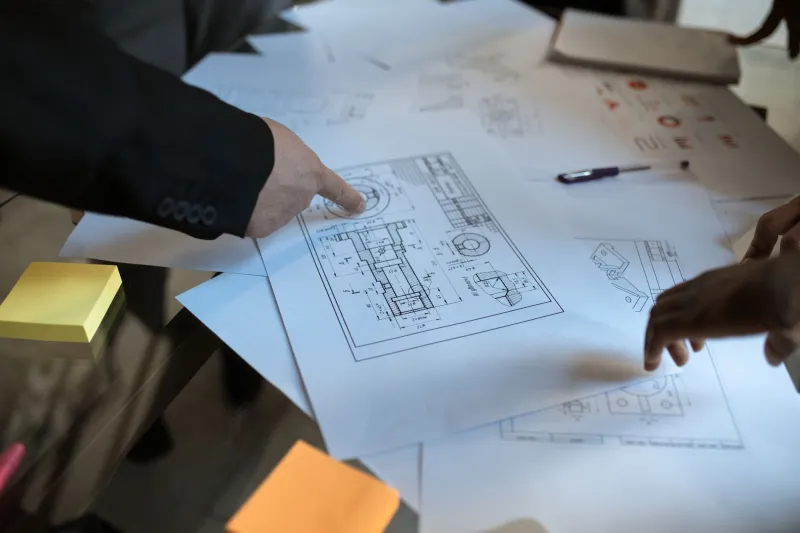
The Drawing Is Complete. The Problem Is Just Beginning.
There is a particular kind of frustration that surfaces on manufacturing floors across the United States with uncomfortable regularity. A design package arrives from the engineering team — complete, signed off, and technically accurate by every internal standard. Within days, the production team is back with questions. Dimensions that cannot be held with available tooling. Tolerances that assume a surface finish the facility cannot achieve at volume. Assembly sequences that look logical on screen but are physically impossible on the line.
The design is not wrong, exactly. It is simply not manufacturable — at least not in the way the engineering team envisioned. And by the time that reality surfaces, the schedule has already started slipping.
This dynamic is not an anomaly. It is one of the most pervasive and underacknowledged sources of production delay, cost overrun, and quality failure in US industrial manufacturing. And unlike equipment breakdowns or supply chain disruptions, it originates entirely within the organization.
The Anatomy of a Handoff Failure
Design-to-production handoffs fail in predictable ways. Understanding the common failure points is the first step toward addressing them systematically.
Incomplete or ambiguous documentation. Engineering drawings that omit critical manufacturing notes, reference outdated material specifications, or use tolerancing conventions inconsistently create interpretation gaps that propagate downstream. When a machinist or process engineer has to infer intent, errors become likely.
Assumption misalignment. Design engineers frequently develop components based on theoretical manufacturing capabilities rather than the actual constraints of the production environment. The assumption that a 0.001" surface flatness tolerance is achievable on a legacy milling center — without verifying with the shop — is a common and costly one.
Insufficient design review participation. Many facilities conduct design reviews with engineering-only attendance. When manufacturing engineers, quality personnel, and production supervisors are excluded from the review process, the feedback loop that catches producibility issues before release is absent.
Informal change communication. Late-stage design revisions communicated verbally, through email chains, or via markup on printed drawings — rather than through formal engineering change order (ECO) processes — create version control failures. Production teams sometimes build to superseded drawings without realizing it.
Cultural distance between departments. In facilities where design engineering and manufacturing operate in separate buildings, on separate schedules, or under separate leadership structures, the informal relationship-building that enables proactive communication degrades. Problems that might be resolved with a five-minute conversation instead generate formal nonconformance reports weeks later.
What It Actually Costs
The financial impact of handoff failures is rarely captured in a single budget category, which is part of why the problem persists. The costs are distributed across rework labor, material scrap, schedule recovery, and customer relationship damage.
Consider a representative scenario: a contract manufacturer in the Midwest accepts a new program for a precision machined component assembly. The design package is delivered on time. During first article inspection, the production team discovers that one critical hole pattern — correctly dimensioned on the drawing — intersects with a internal cavity in a way that makes the specified drill depth unachievable without custom tooling not in the facility's inventory. The engineering team had not consulted the shop's tooling library during design.
The result: a three-week delay to source and qualify the required tooling, $18,000 in expedite fees, a redesigned fixturing approach, and a customer who moved 30% of their follow-on volume to a competitor at contract renewal. The original design error cost less than an hour to correct. The downstream consequences were measured in months and dollars.
Industry data supports the severity of the pattern. Research from the Product Development Institute suggests that between 50% and 70% of product quality problems can be traced to decisions made during the design phase. The cost to correct a design defect identified during production is estimated to be 10 to 100 times greater than correcting the same defect during the design phase itself.
Where the Process Breaks Down Most Often
Through work with industrial clients across sectors including aerospace, defense, heavy equipment, and process manufacturing, several recurring breakdown points emerge with particular frequency.
The "over the wall" release model. Engineering completes a design in isolation, releases it to manufacturing, and considers its responsibility fulfilled. Manufacturing inherits the package and begins identifying problems. By the time feedback reaches engineering, schedules are already compromised.
Tolerance stack-up oversights. Individual component tolerances that appear reasonable in isolation can produce assemblies that are out of specification when combined. Without systematic tolerance analysis — and without manufacturing input on which tolerances are actually achievable — stack-up failures surface during assembly rather than on paper.
Material substitution without process review. A material change approved by engineering for cost or lead time reasons may have processing implications — different machinability, heat treatment response, or surface treatment compatibility — that the production team is not informed of in time to adjust.
Digital-to-physical translation gaps. CAD models and physical production environments are not always synchronized. Nominal model geometry does not communicate process requirements, and reliance on 3D models without fully detailed drawings has introduced new ambiguities in some facilities that moved away from traditional drafting practices.
Protocols That Close the Gap
The organizations that manage design handoffs most effectively share a set of structural and cultural practices that are worth examining as a framework.
Concurrent engineering disciplines. Rather than sequential handoffs, high-performing facilities involve manufacturing engineering in design reviews from concept through release. This does not require manufacturing engineers to drive design decisions — it requires them to be present, informed, and empowered to raise producibility concerns early.
Design for Manufacturability (DFM) checkpoints. Formal DFM reviews, conducted with cross-functional participation at defined design maturity gates, create structured opportunities to surface and resolve producibility issues before they become production problems. These reviews should include documented action items and closure requirements.
Standardized handoff packages. A consistent, comprehensive design release package — including drawings, specifications, material callouts, inspection criteria, and any known manufacturing constraints — reduces the interpretive burden on the receiving team. Checklists that both releasing and receiving parties sign off on create mutual accountability.
Controlled change management. Every design change, regardless of perceived magnitude, should flow through a formal ECO process with defined distribution, acknowledgment, and implementation tracking. Informal changes are where version control failures begin.
Post-launch review cycles. Scheduling a structured debrief 60 to 90 days after production launch — with both engineering and manufacturing participants — captures lessons that improve future handoffs and builds the cross-functional relationships that enable proactive communication on the next program.
The Organizational Case for Getting This Right
The argument for investing in better design-to-production communication is not merely operational — it is strategic. US manufacturers competing on lead time, quality, and program responsiveness cannot afford to absorb the schedule and cost penalties that handoff failures generate.
More fundamentally, the problem is solvable. Unlike equipment failures driven by material fatigue or supply disruptions caused by global logistics dynamics, communication failures between internal teams are within the direct control of the organization. The barrier is rarely technical. It is procedural, cultural, and — ultimately — a matter of leadership priority.
Facilities that treat the design-to-production handoff as a critical process worthy of the same rigor applied to quality systems and production scheduling consistently demonstrate shorter time-to-market, lower first-article failure rates, and stronger program margins. That outcome is available to any organization willing to examine where its internal communication is breaking down — and to build the structure necessary to fix it.