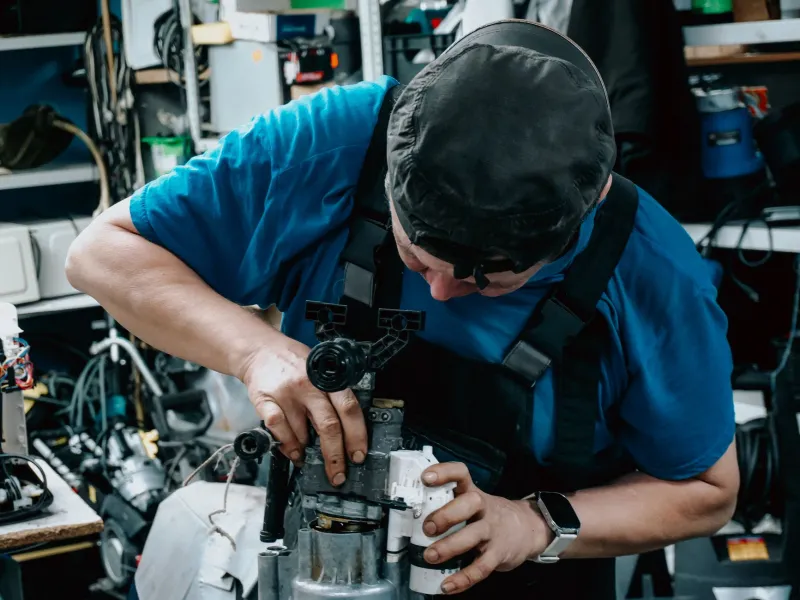
Alert Fatigue in the Machine Room: When Predictive Maintenance Data Becomes a Liability
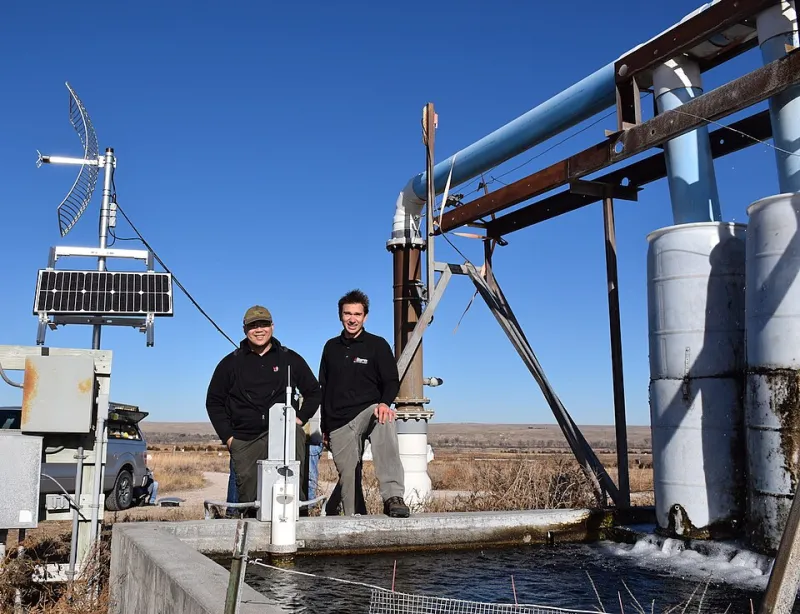
Photo: Edwardpultar, CC BY-SA 4.0, via Wikimedia Commons
The case for predictive maintenance has always been compelling in principle. By monitoring equipment condition continuously and intervening before failure occurs, manufacturers can eliminate the catastrophic downtime of reactive maintenance while avoiding the waste of replacing components that still have service life remaining. The technology to support this approach—vibration sensors, thermal cameras, ultrasonic detectors, oil analysis systems—has become increasingly accessible and affordable over the past decade.
American industrial operators have invested accordingly. Sensor networks have proliferated across production floors. Data platforms aggregate readings from hundreds of monitoring points. Algorithms flag deviations from baseline and generate maintenance recommendations with apparent precision.
And yet, in facility after facility, a quiet problem has emerged alongside these investments: maintenance teams are spending significant time and resources responding to alerts for equipment that, upon inspection, shows no meaningful degradation. Components are being replaced ahead of schedule not because they are failing, but because an algorithm determined that a measured parameter had crossed a threshold.
This is alert fatigue in the industrial context. And its costs—in labor, in parts, in the erosion of maintenance team confidence in their own monitoring systems—deserve serious engineering attention.
The Gap Between Measurement and Meaning
The core challenge of sensor-based predictive maintenance is not data collection. Modern monitoring systems generate data with impressive fidelity. The challenge is interpretation: distinguishing between measurements that indicate genuine degradation and measurements that reflect normal operational variance.
Every piece of industrial equipment operates within a range of normal condition signatures that vary with load, temperature, speed, and dozens of other operational parameters. A vibration reading that appears elevated on a standalone basis may be entirely appropriate given the production conditions at the time of measurement. A thermal anomaly that triggers an alert may reflect a transient operating state rather than a developing failure.
Algorithms designed to detect early-stage degradation are necessarily calibrated to be sensitive. Sensitivity that catches genuine failures early also generates false positives—alerts for conditions that are within the normal operating envelope but that exceed a fixed threshold. When those false positives accumulate, maintenance teams face a dilemma: respond to every alert and risk unnecessary interventions, or develop informal filters that may cause them to miss genuine degradation signals.
Neither outcome serves the operational objectives that justified the predictive maintenance investment.
The Real Cost of Unnecessary Interventions
When maintenance personnel respond to a false positive alert by inspecting and determining that no action is required, the direct cost is relatively modest—inspection labor and the time lost from other work. But when that alert triggers a component replacement decision, the cost profile changes significantly.
Premature component replacement carries several categories of cost that are rarely tracked against the predictive maintenance program's performance metrics. There is the direct cost of the replacement part itself. There is the labor cost of the replacement procedure. There is the production downtime—however brief—associated with the intervention. And there is the residual service life of the replaced component, which represents value that was purchased but never realized.
In rotating equipment applications, where bearings, seals, and other wear components are replaced based on vibration data, the cumulative cost of premature replacements can be substantial. A bearing that had 2,000 hours of remaining service life when it was replaced based on a vibration alert represents a specific, quantifiable economic loss—one that does not appear in the maintenance cost ledger as an error, because the replacement was authorized by the monitoring system.
Beyond the direct costs, there is a subtler operational consequence: maintenance resource misallocation. Every hour a technician spends responding to a false positive alert is an hour not spent on genuinely value-creating maintenance activity. In facilities where skilled maintenance personnel are a constrained resource—which describes most American manufacturing operations today—this opportunity cost is meaningful.
Why Alert Thresholds Are Set the Wrong Way
Many of the alert threshold problems that produce false positive cascades originate in the initial configuration of the monitoring system. Vendors and system integrators, understandably motivated to demonstrate the sensitivity of their technology, often configure alerting parameters to flag deviations that are well within the normal operating range of the monitored equipment.
This configuration approach treats all deviations from a statistical baseline as potential indicators of developing failure. In a laboratory environment, this sensitivity is appropriate. On a production floor where equipment operates across a wide range of loads, temperatures, and duty cycles, it generates noise that obscures genuine signal.
The alternative—configuring thresholds based on the actual failure physics of each monitored component—requires more engineering investment up front. It demands an understanding of how each failure mode manifests in sensor data, at what rate degradation typically progresses once it begins, and what lead time is required for the maintenance team to plan and execute an intervention. This is a more demanding calibration exercise than applying standard deviation multipliers to baseline data, but it produces a monitoring system that generates alerts with genuine predictive value.
Building a Maintenance Decision Framework That Reflects Actual Risk
The objective of a well-designed predictive maintenance program is not to eliminate all alerts—it is to ensure that alerts reliably indicate conditions that warrant action. Achieving this requires a decision framework that goes beyond threshold-triggered responses.
Trend Analysis Over Point-in-Time Thresholds. A single elevated vibration reading is far less informative than a directional trend across multiple readings over time. Maintenance scheduling decisions should be based on the rate and direction of change in condition indicators, not on the fact that a single measurement crossed a fixed line.
Operational Context Integration. Monitoring systems should incorporate operational data—production load, ambient temperature, duty cycle—to contextualize sensor readings. An alert generated under maximum load conditions carries different significance than the same reading at idle. Systems that cannot distinguish between these contexts will generate false positives systematically.
Failure Mode Specificity. Different failure modes produce different sensor signatures at different rates of progression. A maintenance response framework should be calibrated to the specific failure modes of each monitored component, with alert severity and response urgency scaled to the actual risk of functional failure within the operational planning horizon.
Human Engineering Judgment as a Validation Layer. Algorithmic monitoring systems are tools that support engineering judgment—they are not substitutes for it. Maintenance teams should be empowered to apply experience-based assessment to alerts before committing to intervention, rather than treating every system-generated recommendation as a mandatory work order.
The Program Is Only as Good as Its Calibration
Predictive maintenance technology, properly deployed, delivers genuine operational value. The problem is not the technology itself—it is the assumption that deploying sensors and connecting them to an alerting platform constitutes a complete maintenance strategy.
The organizations that extract consistent ROI from condition monitoring programs are those that treat calibration, threshold refinement, and failure mode analysis as ongoing engineering activities rather than one-time implementation tasks. They measure their monitoring program's performance not only by the failures it catches, but by the interventions it correctly determines are unnecessary.
For US manufacturers who have invested in predictive maintenance infrastructure and are not seeing the returns they expected, the diagnostic question is worth asking directly: how many of last year's maintenance interventions were driven by genuine degradation signals—and how many were driven by alerts that a well-calibrated system would never have generated?