Before the First Bolt Is Turned: How Digital Twin Technology Is Redefining Industrial Design Validation
For most of manufacturing history, the only reliable way to know whether a design would hold up under real operating conditions was to build it and find out. Prototypes were fabricated, tested to failure, redesigned, and tested again. The process was expensive, time-consuming, and — in industries where design errors carry serious safety or operational consequences — occasionally catastrophic.
That paradigm is changing. Not gradually, but with the kind of velocity that tends to separate industries into those who adapted early and those who spent years catching up.
Digital twin technology — the practice of creating a high-fidelity virtual replica of a physical system and subjecting it to simulated operating conditions — is fundamentally altering the economics and risk profile of industrial design validation. Across sectors ranging from heavy equipment manufacturing to process engineering, US manufacturers are discovering that the most effective place to catch a critical design flaw is in a simulation environment, long before the first material is sourced or the first component is machined.
What a Digital Twin Actually Is
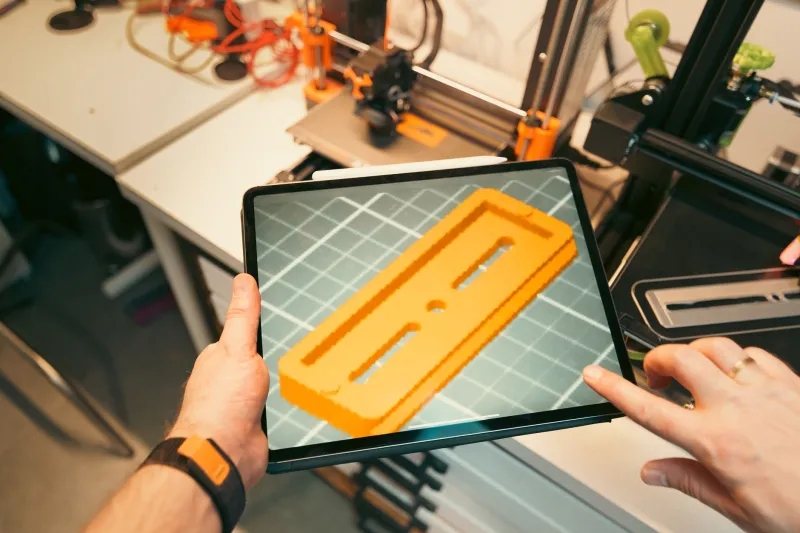
The term "digital twin" is sometimes used loosely in industrial technology discussions, which can create confusion about what the technology actually involves. At its core, a digital twin is a dynamic computational model of a physical asset, system, or process — one that accurately reflects not just the geometry of the design but its material properties, boundary conditions, thermal characteristics, load distributions, and operational parameters.
Unlike static CAD models or basic finite element analyses, a mature digital twin is continuously updated with real-world data and can simulate the behavior of a system across its full operating range, including edge cases and failure scenarios that would be prohibitively expensive or dangerous to replicate physically.
The sophistication of a digital twin is directly proportional to the quality of the underlying data and the fidelity of the physical modeling. A well-constructed digital twin of an industrial pump assembly, for example, can predict bearing wear rates, identify resonance conditions that would not be apparent from static analysis, and model the thermal behavior of seals under varying fluid temperatures — all before a single prototype is commissioned.
The Failure Prevention Calculus
The financial case for simulation-driven design validation becomes clear when examined through the lens of failure cost distribution. Engineering research has long established that the cost of correcting a design defect increases by roughly an order of magnitude at each successive stage of the product lifecycle. A flaw identified during conceptual design may cost hundreds of dollars to address. The same flaw, if it reaches field deployment, can cost hundreds of thousands — or more, if it precipitates a recall, regulatory action, or liability claim.
Digital twin technology moves defect identification as far upstream as possible. By subjecting a virtual model to the full range of conditions it will encounter in service — including the abnormal and the extreme — engineers can surface failure modes that traditional design review processes routinely miss.
A heavy equipment manufacturer in the Ohio Valley region recently documented this dynamic in concrete terms. A redesigned hydraulic manifold assembly, intended for use in high-cycle construction equipment, was subjected to digital twin simulation prior to prototype production. The simulation identified a fatigue crack initiation site at a specific internal passage geometry that the design team had not flagged during conventional review. Modifying the geometry in the virtual model required approximately 40 engineering hours. Had the same defect propagated to field failure in the installed equipment fleet, the manufacturer's own estimate placed the potential recall and repair exposure at well over $2 million.
Adoption Trends Among US Industrial Manufacturers
Digital twin adoption in US manufacturing has accelerated significantly over the past three years, driven by a convergence of factors: decreasing computational costs, the maturation of industrial IoT infrastructure that feeds real-time data into simulation models, and a growing awareness within the engineering community of the technology's demonstrated ROI.
According to recent industry surveys, adoption rates are highest in sectors with the greatest exposure to design failure consequences — aerospace, defense, and large-scale process industries. However, the technology is increasingly accessible to mid-market manufacturers as cloud-based simulation platforms reduce the infrastructure investment required to implement it.
The barriers that historically limited digital twin adoption — primarily the cost of high-performance computing resources and the specialized expertise required to build and validate accurate models — are eroding steadily. What was once the exclusive domain of the largest industrial corporations is becoming a practical option for manufacturers operating at significantly smaller scales.
Simulation as a Competitive Differentiator
Beyond its role in failure prevention, digital twin technology is reshaping competitive dynamics in industrial design. Manufacturers who can validate designs virtually are able to compress development timelines substantially, reducing the number of physical prototyping iterations required and accelerating time to market without sacrificing engineering rigor.
This capability has particular strategic significance in markets where speed of delivery is a differentiating factor. A custom industrial equipment manufacturer that can complete design validation in weeks rather than months — with a higher degree of confidence in the result — holds a meaningful advantage over competitors still relying on traditional build-and-test methodologies.
Apex Engineering Solutions has observed this dynamic directly in engagements where simulation-integrated design processes have allowed clients to respond to custom specification requests with faster delivery commitments than the market expected, while maintaining the precision standards their customers require.
The Integration Challenge
For manufacturers evaluating digital twin adoption, the most significant implementation challenge is typically not technological — it is organizational. Building accurate simulation models requires a deep integration of design engineering, materials science, process knowledge, and operational data. Organizations where these disciplines operate in separate silos frequently struggle to assemble the cross-functional inputs that high-fidelity digital twins demand.
Successful implementations tend to share a common characteristic: a deliberate organizational commitment to treating simulation as a core engineering discipline rather than an ancillary software tool. This means investing in the expertise to build and validate models properly, establishing data pipelines that keep digital twins current with operational reality, and integrating simulation outputs into design review processes in a structured and systematic way.
Looking Forward
The trajectory of digital twin technology in US manufacturing points clearly toward deeper integration, broader accessibility, and expanding application domains. As artificial intelligence and machine learning capabilities are incorporated into simulation platforms, the ability to automatically identify and evaluate design alternatives will extend the technology's value proposition further still.
For US manufacturers navigating an environment of increasing design complexity, tightening performance requirements, and expanding liability exposure, the question is no longer whether simulation-driven design validation is worth pursuing. The more pressing question is how quickly it can be implemented — and how many preventable failures will occur in the interim.