When Heat Becomes the Enemy: The Engineering Case for Taking Thermal Management Seriously
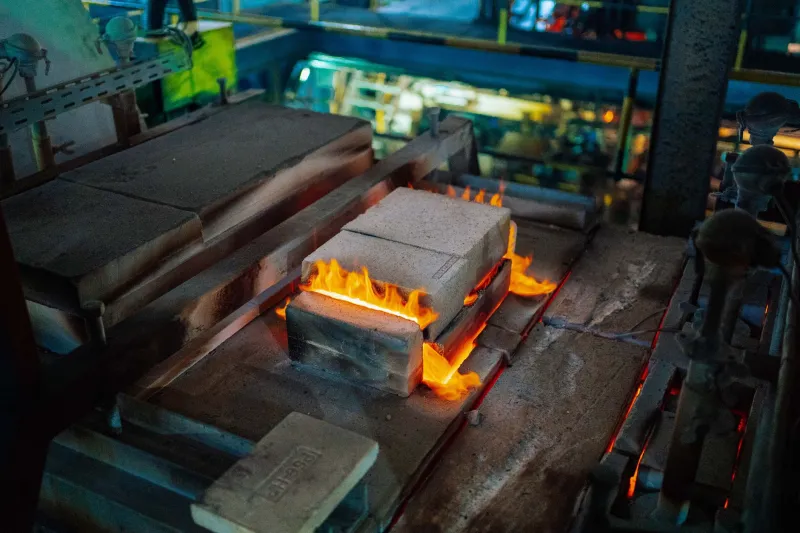
Every plant manager has a mental checklist of the usual suspects when output quality begins to slip. Worn tooling. Operator error. Raw material variation. Vibration. These are the explanations that surface first in a root cause meeting, and in many cases, they are wrong — or at least incomplete. What frequently escapes scrutiny is the one variable that is always present, always active, and almost never directly measured with the rigor it deserves: temperature.
Thermal expansion and creep failure are not exotic phenomena. They are documented, well-understood engineering realities. Yet in the daily rhythm of American manufacturing operations, thermal management is treated as a background condition rather than an active engineering control. The consequences of that oversight accumulate quietly, and by the time they become visible, the damage — to tolerances, to throughput, and to profitability — is already substantial.
Understanding the Mechanism: What Thermal Creep Actually Does
Thermal creep refers to the slow, time-dependent deformation of a material under sustained mechanical stress at elevated temperatures. Unlike sudden fracture or rapid wear, creep operates on a timeline that can span weeks, months, or years. Components that appear structurally sound will gradually lose dimensional integrity as the combined effect of heat and load causes material to flow at the microscopic level.
Thermal expansion compounds this problem. As equipment reaches operating temperature, metal components lengthen, widen, and shift. In isolation, these movements are predictable and can be engineered around. The difficulty arises when those movements occur in assemblies where clearances were established at ambient temperature, where alignment was set during a cold startup, or where compensating mechanisms have not been maintained. The result is a machine that is operating out of specification every time it reaches thermal equilibrium — which is to say, most of the time it is actually running.
For precision machining centers, hydraulic systems, and high-cycle stamping equipment, even a few thousandths of an inch of thermally induced displacement can push parts outside acceptable tolerance bands. The defects that follow are real. The cause is rarely identified correctly.
Case Perspective: The CNC Facility That Blamed Its Spindles
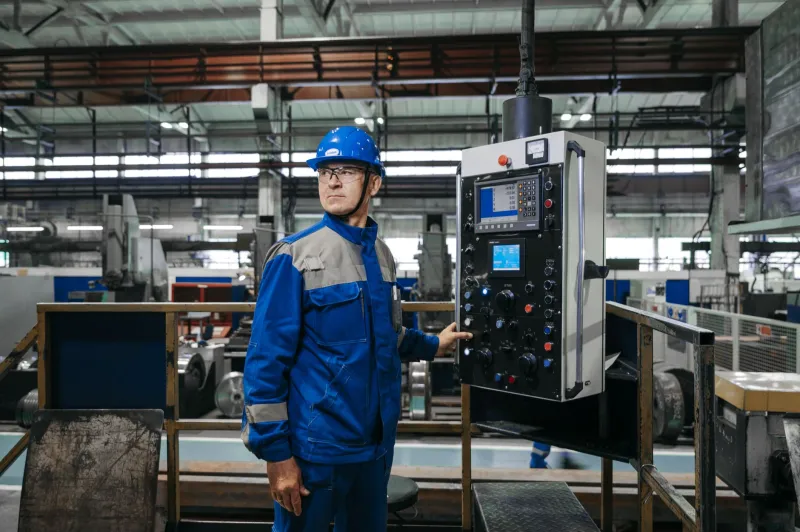
Consider a representative scenario familiar to many precision machining operations in the Midwest. A facility producing tight-tolerance aerospace components began experiencing a gradual increase in out-of-spec parts during the second and third hours of each production shift. Initial investigations pointed to spindle bearing wear, and two spindle assemblies were rebuilt at significant cost. The problem persisted.
A more thorough engineering review — one that included thermal mapping of the machine envelope over a full shift — revealed that the actual culprit was differential thermal expansion between the machine's cast iron base and its aluminum worktable. As the shop floor temperature rose and the machine reached steady-state operating temperature, the worktable shifted relative to the spindle centerline by a measurable amount. The spindles were fine. The thermal compensation strategy was nonexistent.
The fix involved a combination of controlled warm-up protocols, periodic in-cycle re-referencing, and targeted insulation of the base casting. Total implementation cost was a fraction of the spindle rebuilds. The lesson was not lost on the engineering team: the most expensive diagnostic is the one that starts with the wrong hypothesis.
The Overlooked Role of Ambient Conditions
Industrial facilities in the United States operate across an extraordinary range of ambient environments. A plant in Phoenix, Arizona faces radiant heat loads and extreme seasonal swings that a facility in Minneapolis, Minnesota does not. A foundry adjacent to a stamping line creates thermal microclimates that can vary by 30 degrees Fahrenheit or more within a single building.
These conditions are rarely incorporated into the baseline engineering assumptions governing equipment alignment, calibration intervals, or process control limits. The result is that facilities are, in effect, operating their equipment in an environment that does not match the environment for which it was configured. This is not a minor discrepancy. For high-precision applications, it is a source of chronic, low-grade performance degradation that resists conventional troubleshooting.
Engineering teams that begin systematically logging ambient and surface temperatures alongside production quality data frequently discover correlations that were previously invisible. Reject rates that spike on hot summer afternoons. Dimensional drift that appears on Monday mornings after a cold weekend shutdown. These patterns are diagnostic gold — but only if the data exists to reveal them.
Practical Thermal Management Strategies That Do Not Require a Capital Budget
Addressing thermal management does not necessarily require new equipment or major facility modifications. The following approaches represent high-value interventions that most engineering teams can implement with existing resources.
Establish Thermal Baselines. Before any corrective action is possible, current thermal behavior must be documented. Infrared thermography, surface-mounted thermocouples, and data logging at key machine interfaces provide the foundation. This baseline reveals where heat is accumulating, where gradients are steepest, and where expansion is occurring unchecked.
Implement Structured Warm-Up and Stabilization Protocols. Many precision machines are designed to be operated at thermal equilibrium, but production pressure routinely results in parts being made during the transient warm-up phase. Formalizing warm-up cycles and defining minimum stabilization periods before critical production runs can meaningfully reduce thermally induced variation.
Audit Coolant and Lubrication Systems. Cutting fluids and lubricants serve a thermal management function as well as a mechanical one. Coolant systems that are undersized, poorly maintained, or operating at incorrect concentrations will fail to stabilize machine temperatures effectively. A systematic audit of these systems is a low-cost intervention with outsized impact.
Review Alignment and Calibration Schedules for Thermal Sensitivity. Alignment checks performed exclusively during cold shutdowns will not reflect the machine's actual operating geometry. Engineering teams should evaluate whether critical alignments are verified at operating temperature, and whether calibration intervals account for seasonal ambient changes.
Isolate Heat Sources Where Possible. Motors, hydraulic power units, and control enclosures are significant heat contributors that are often mounted in close proximity to precision components. Physical separation, targeted shielding, or directed airflow can reduce the thermal load on sensitive assemblies without structural modification.
Making Thermal Management a Standard Engineering Discipline
The broader challenge is cultural as much as it is technical. Thermal management tends to be treated as a specialty concern — something relevant to furnace design or semiconductor fabrication, but not to general industrial manufacturing. That assumption is incorrect, and it is costing American manufacturers real money.
Integrating thermal analysis into standard engineering review processes — from equipment procurement specifications to process qualification protocols — positions thermal behavior as a managed variable rather than an accepted unknown. Facilities that make this shift find that a meaningful portion of their chronic quality and reliability problems resolve without dramatic intervention.
At Apex Engineering Solutions, our experience across a broad range of industrial environments consistently reinforces one conclusion: the facilities that control their thermal environment with the same discipline they apply to mechanical tolerances outperform those that do not. The physics is not negotiable. The only question is whether your engineering program is engaging with it proactively or absorbing its consequences reactively.