Speed at What Cost? Rethinking Automation ROI Through an Engineering Lens
The appeal of industrial automation is straightforward: faster throughput, reduced labor dependency, and the promise of consistent output. For American manufacturers operating in an increasingly competitive landscape, these advantages are difficult to ignore. Yet across facilities from the Midwest to the Gulf Coast, a troubling pattern has emerged. Companies that invested heavily in automation infrastructure are discovering that the systems they installed to solve one set of problems have quietly introduced several others—some of which are far more expensive to resolve.
This is not an argument against automation. It is, however, a case for approaching it with the same rigor applied to any complex engineering decision. Velocity without precision is not progress. And in manufacturing, the consequences of misaligned implementation are measured in dollars, downtime, and diminished competitiveness.
The Mechanical Consequences of Uncalculated Speed
One of the most underappreciated trade-offs in industrial automation is the relationship between increased operational speed and mechanical stress. When a production line is accelerated to capture throughput gains, the dynamic forces acting on machinery change substantially. Vibration profiles shift. Bearing loads increase. Resonance frequencies that were harmless at lower speeds can become structurally significant at higher ones.
Consider a mid-sized fabrication facility that upgrades its conveyor and assembly systems to operate at twice the previous cycle rate. On paper, the math is compelling. In practice, the engineering team may find that fastener fatigue rates climb, alignment tolerances drift more rapidly, and the overall maintenance burden on mechanical components increases in ways the original ROI model never accounted for.
These are not hypothetical risks. They are well-documented phenomena in mechanical engineering literature, and they are routinely underweighted in automation feasibility studies that prioritize financial projections over technical assessment. A credible evaluation must include vibration analysis, fatigue modeling, and a clear understanding of how accelerated operation affects the service life of every component in the affected system.
Integration Costs: The Budget Line That Grows
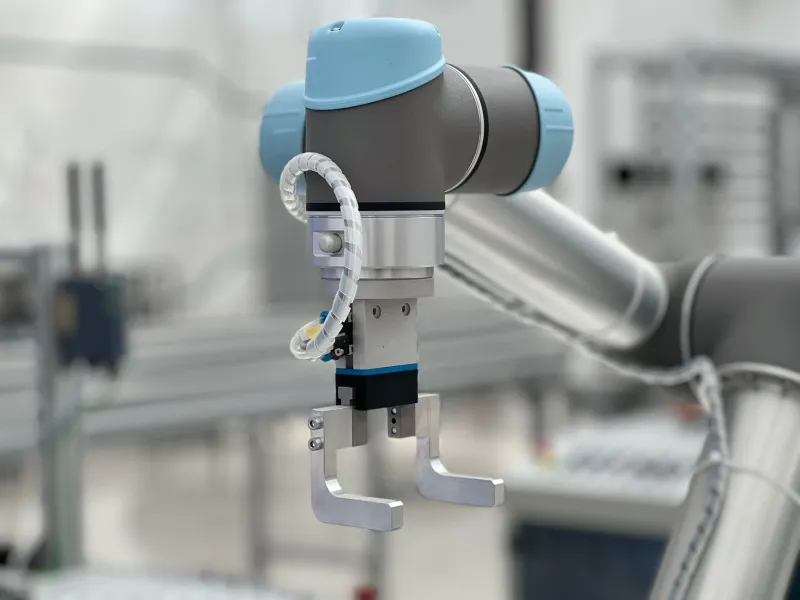
Beyond the mechanical realm, the financial architecture of automation projects frequently collapses under the weight of integration complexity. The quoted cost of an automated system—whether a robotic cell, a vision-guided assembly platform, or an automated guided vehicle network—rarely reflects the full scope of what it takes to make that system function within an existing production environment.
Legacy equipment, proprietary communication protocols, and facility infrastructure that was never designed with automation in mind all contribute to integration expenses that can dwarf the original capital investment. A manufacturer in the automotive supply chain, for example, may purchase a robotic welding system with a compelling five-year payback period, only to find that adapting it to communicate with existing PLC architecture, modifying the facility's electrical service, and retraining personnel adds forty to sixty percent to the total project cost.
The engineering discipline of systems integration is not peripheral to automation planning—it is central to it. Organizations that treat integration as an afterthought invariably find themselves renegotiating budgets, extending timelines, and, in some cases, operating hybrid manual-automated workflows that capture neither the efficiency of full automation nor the flexibility of purely human-operated processes.
When Flexibility Outweighs Speed
Perhaps the most strategically significant question in any automation discussion is one that is rarely asked with sufficient seriousness: how variable is the production environment this system must serve?
Fully automated systems excel in high-volume, low-variation environments. When a facility produces the same part, to the same specification, in the same sequence, day after day, automation delivers on its promise. But a substantial portion of US manufacturing does not operate in those conditions. Contract manufacturers, job shops, and facilities serving diverse customer bases often handle dozens of product configurations, frequent changeovers, and specification changes that arrive with little notice.
In these environments, the inflexibility of highly automated systems becomes a structural liability. Reprogramming robotic cells, recalibrating vision systems, and reconfiguring material handling equipment for each new product run consumes time and technical resources that erode the throughput advantages automation was meant to provide. In some cases, a skilled human operator—capable of reading a revised drawing, adapting technique in real time, and communicating with engineering staff when something looks wrong—outperforms an automated system on a total-cost basis across a product mix that changes frequently.
This is not a sentimental argument for preserving manual labor. It is an empirical observation about system performance under variable conditions. Hybrid approaches, in which automation handles the repetitive, high-volume elements of a process while skilled personnel manage the variable and judgment-intensive elements, frequently represent the most defensible engineering solution for manufacturers whose production environment does not fit the automation ideal.
Building a Technically Sound Automation Case
For manufacturers committed to pursuing automation—and many should be—the path to a successful implementation begins with technical assessment, not vendor selection. Before any purchasing decision is made, engineering teams should conduct a thorough process audit that documents cycle times, variation rates, failure modes, and integration dependencies across the affected production systems.
This assessment should answer several foundational questions. What mechanical stresses will increased operational speed introduce, and how will the maintenance program be adjusted to address them? What is the realistic total cost of integration, including infrastructure modifications, software development, and personnel training? How will the system perform when product specifications change, and what is the cost and timeline of reconfiguration?
Return on investment calculations should incorporate not only labor savings and throughput gains but also the increased maintenance costs associated with higher-speed operation, the amortized cost of integration complexity, and a realistic estimate of downtime during implementation and reconfiguration cycles. An automation project that pencils out only under optimistic assumptions is not a sound engineering investment—it is a financial projection dressed in technical language.
The Discipline of Knowing When to Hold Back
One of the more counterintuitive conclusions a rigorous automation assessment sometimes produces is that the optimal solution is not full automation. This conclusion is difficult for organizations under competitive pressure to accept, particularly when peers and industry publications consistently celebrate automation as the definitive path to manufacturing competitiveness.
But engineering judgment is not a popularity contest. The value of a thorough technical evaluation lies precisely in its capacity to surface uncomfortable truths before they become expensive realities. A manufacturer that identifies, through disciplined analysis, that a hybrid approach will outperform full automation on a ten-year cost basis has made a strategically superior decision—regardless of how that decision compares to industry trends.
At Apex Engineering Solutions, this kind of analysis is the foundation of how we approach industrial improvement. Automation is a powerful tool. Like all powerful tools, it performs best when applied with precision, informed by a complete understanding of the engineering environment in which it must operate. The question is never simply whether to automate. The question is whether the specific automation solution under consideration will genuinely perform better than the alternatives—and whether the organization has done the technical work to know the answer with confidence.