The Intelligence Already on Your Shop Floor: A Systematic Approach to Learning From Legacy Equipment

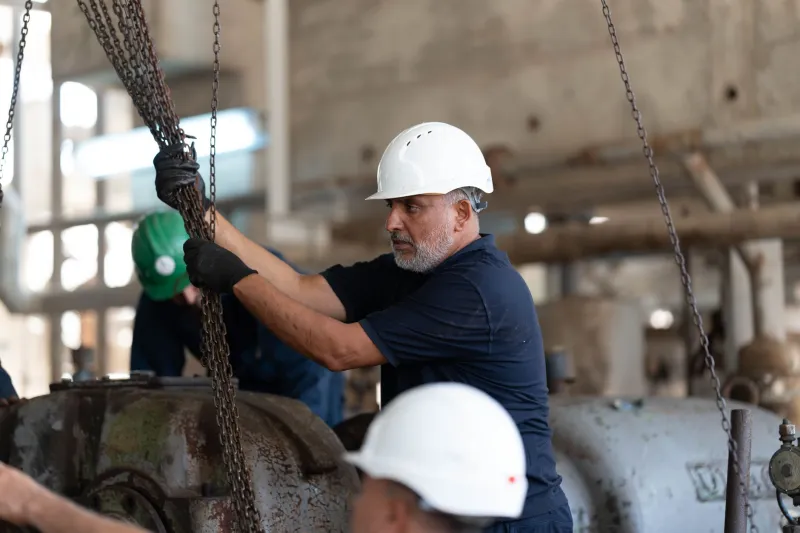
There is a particular kind of machine found in manufacturing facilities across the United States that occupies a curious position: it is old enough to be scheduled for replacement, reliable enough that no one wants to be the person who authorizes removing it, and understood well enough by a handful of experienced operators that its institutional knowledge has never been formally documented. When that machine eventually does come out — whether due to a capital replacement program, a facility consolidation, or a breakdown that finally tips the economics — most of what it knew leaves with it.
This is not a sentimental observation. It is an engineering problem with measurable consequences.
The Industry's Replacement Reflex
American manufacturing culture has developed a strong bias toward new equipment. This is understandable. New machinery comes with warranties, support contracts, modern control systems, and the promise of higher throughput. Capital equipment vendors are sophisticated at making the case for replacement, and that case is often genuinely valid.
But the replacement reflex has a blind spot. It assumes that the decision to replace is primarily a forward-looking calculation — what will the new machine deliver? — when it should also be a backward-looking one: what has the existing machine demonstrated that we have not yet fully understood?
Legacy equipment that has performed reliably for decades has, in effect, passed an extended validation test that no new machine can replicate. Its design proportions, material selections, maintenance requirements, and operational sensitivities have all been stress-tested by real-world production conditions. That record is an engineering data set. Treating it as such, rather than as a disposal problem, is one of the higher-return analytical investments a manufacturing engineering team can make.
What Technical Forensics Actually Means in Practice
The term "reverse engineering" carries connotations of intellectual property violation or competitive espionage. In the context being discussed here, it means something entirely different: the systematic documentation and analysis of your own equipment to extract design intelligence that can be applied to procurement decisions, troubleshooting, and operational improvement.
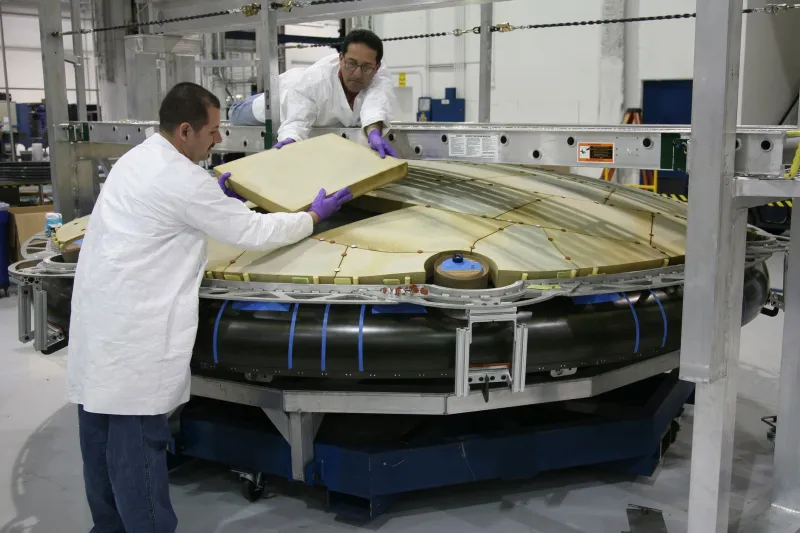
The process begins with structured disassembly documentation. When a legacy machine is taken out of service — for overhaul, relocation, or retirement — engineering staff should capture detailed dimensional data, material samples from high-wear components, surface finish characteristics at critical interfaces, and photographic records of wear patterns. This is not a significant time investment relative to the value of the information gathered, yet it is almost universally skipped in the rush to clear floor space for the replacement unit.
Wear pattern analysis is particularly instructive. The way a machine wears tells a precise story about where loads concentrate, which surfaces carry the most work, and which design decisions proved durable versus which required repeated maintenance attention. A set of worn guide rails from a 30-year-old transfer line contains more information about real-world load distribution than most finite element analyses performed at the design stage.
Identifying What Made the Old Machine Good
Not every legacy machine deserves forensic attention. The analysis is most valuable when applied to equipment with a demonstrated record of exceptional performance — machines that held tolerance longer than expected, required less maintenance than comparable units, or produced consistently superior output quality.
The engineering question is not "why is this machine old?" but "what specific design characteristics contributed to its sustained performance?" That question tends to yield answers in several recurring categories.
Structural mass and damping. Many high-performing legacy machines were built with considerably more material than modern equivalents. Cast iron bases, heavy weldments, and generous wall thicknesses provide vibration damping and thermal mass that contribute directly to dimensional stability. Modern designs, optimized for material cost and weight reduction, sometimes sacrifice these characteristics without fully accounting for their performance contribution.
Bearing selection and preload. Legacy equipment often used bearing arrangements that were conservative by current standards — larger than strictly necessary, with preload settings that prioritized stiffness over efficiency. Documenting these specifications provides a reference point when evaluating whether modern replacement equipment has made comparable provisions.
Lubrication architecture. Machines that outlast their expected service life almost always have lubrication systems that delivered oil or grease consistently to every critical interface. Analyzing how those systems were designed — reservoir sizing, delivery frequency, point-of-application geometry — provides a checklist for evaluating new equipment proposals.
Tolerance stack-up philosophy. Examining the actual clearances and fits in a long-running machine reveals how the original designers allocated tolerance across the assembly. In many cases, the clearances that remain after decades of wear are still tighter than the nominal specifications of proposed replacement equipment.
Applying the Analysis to Procurement Decisions
The practical value of this analysis is most directly realized when the findings are used to strengthen equipment procurement specifications. Most manufacturers approach new equipment purchases with a specification sheet derived from production requirements: capacity, speed, accuracy class, control system. Few incorporate lessons from their own operational history into that specification.
A facility that has documented why its 1987 horizontal machining center outperformed its 2009 replacement in terms of thermal stability, for example, is in a position to ask prospective vendors specific, informed questions about how their current designs address the same challenge. That is a fundamentally different procurement conversation — one that is more likely to result in equipment that actually performs as intended.
The documentation also supports a more rigorous total cost of ownership analysis. Maintenance records from the legacy machine, combined with the forensic findings from disassembly, create an empirical basis for estimating what a new machine of similar function will actually cost to operate over its service life — not what the vendor's lifecycle cost model projects.
Extending the Life of Equipment That Still Has Value
Not every forensic analysis ends with a procurement decision. In a significant number of cases, the conclusion is that the machine in question has more useful life remaining than the replacement schedule assumed, and that targeted intervention can extend that life at a fraction of the cost of new capital.
This is not an argument for deferring necessary investment. It is an argument for making that investment decision on the basis of engineering evidence rather than age or appearance. A machine that is 25 years old but has worn components that can be remanufactured to original specification, and whose fundamental structure remains sound, may represent a better capital allocation than a new unit — particularly when the knowledge embedded in its design is factored into the calculation.
The Competitive Case for Institutional Engineering Memory
The manufacturers that consistently outperform their peers in precision, reliability, and operational efficiency tend to share one characteristic: they treat engineering knowledge as a cumulative asset rather than a perishable commodity. They document what works, analyze why it works, and apply those findings systematically to future decisions.
Legacy equipment is one of the richest sources of that knowledge available to any manufacturing organization. The machines that have performed reliably for decades have earned a level of analytical respect that the industry has been slow to extend. Changing that posture — approaching aging equipment as a technical resource rather than a liability — is one of the more straightforward competitive advantages available to American manufacturers willing to do the analytical work.
At Apex Engineering Solutions, we have supported clients through this process across a broad range of industrial sectors. The pattern is consistent: the facilities that learn from what they already have make better decisions about what they acquire next.