Engineering Without Experts: How American Manufacturers Are Preserving Precision in the Face of a Vanishing Skilled Workforce
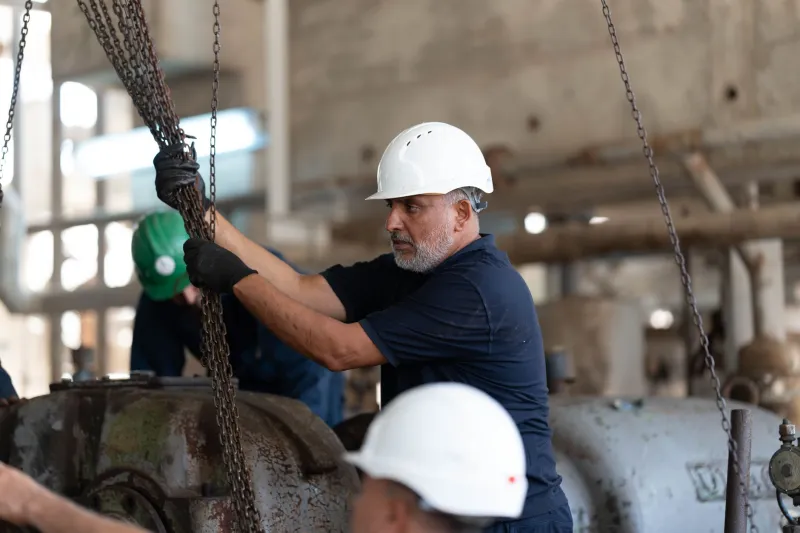
There is a number that should concern every plant manager and engineering director in the United States: 2.1 million. That is the projected number of manufacturing jobs that the National Association of Manufacturers estimates will go unfilled by 2030 due to the skills gap — a figure that has been cited, debated, and largely failed to be acted upon with sufficient urgency. Behind that statistic lies a more immediate and arguably more damaging reality: the accelerating departure of experienced engineers and skilled technicians who carry decades of process knowledge, calibration instinct, and troubleshooting acumen that was never formally documented.
When a machinist with 30 years of experience retires, the company loses more than a pair of hands. It loses a living library of operational intelligence — the subtle adjustments made to compensate for a slightly worn fixture, the preferred feed rates for a particular alloy grade, the early warning signs of a process drift that no alarm threshold would catch. That knowledge, in most facilities, exists nowhere else.
This is the skills shortage paradox in its most consequential form: the expertise most critical to maintaining quality and precision is precisely the expertise least likely to have been captured, codified, or transferred.
The Depth of the Problem
The demographic dynamics driving this crisis are not new, but their industrial effects are accelerating. The manufacturing workforce has aged considerably over the past two decades. According to the Bureau of Labor Statistics, the median age of production workers in durable goods manufacturing has risen steadily, and retirement rates have outpaced the pipeline of replacement talent entering the sector.
The talent pipeline itself presents structural challenges. Engineering programs at US universities continue to produce graduates, but the gap between academic preparation and the applied, domain-specific expertise required in industrial settings remains substantial. A newly hired mechanical engineer may understand finite element analysis as a theoretical construct but lack the practical judgment to interpret results in the context of a specific production environment. That judgment — the ability to read a process, anticipate failure modes, and make sound decisions under operational pressure — develops over years of supervised experience.
When the supervisors retire, the supervised have fewer opportunities to develop it.
The consequences extend beyond quality and safety, though both are directly at risk. Facilities that lose key technical personnel frequently experience a measurable increase in non-conformance rates, a lengthening of troubleshooting cycles, and a reduction in their ability to adapt processes quickly to new materials, product specifications, or customer requirements. In competitive markets, that rigidity is expensive.
Automation as a Knowledge Preservation Strategy
The most visible response to workforce attrition in US manufacturing has been the accelerated adoption of automation. This is frequently framed as a labor replacement strategy — fewer workers needed per unit of output. But the more durable value proposition is different: automation, when implemented thoughtfully, encodes expert judgment into repeatable, auditable process logic.
Consider a precision machining operation where a veteran operator has spent years developing an intuitive understanding of optimal cutting parameters for a specific part family. When that individual retires, those parameters do not automatically transfer to the next operator. But if the facility has invested in CNC programming infrastructure that captures and systematizes those parameters — with documented rationale and tolerance windows — the knowledge survives the departure.
Advanced automation platforms increasingly support this function explicitly. Programmable logic controllers, CNC systems, and industrial robotics can be configured to embed expert-derived process parameters as locked or guided defaults, reducing the surface area for operator-introduced variation while preserving the underlying engineering intent. The machine becomes, in a meaningful sense, a vessel for the expertise of the person who configured it.
AI-Assisted Engineering: Augmenting What Remains
Artificial intelligence tools are beginning to play a meaningful role in compensating for reduced engineering depth. AI-assisted design platforms can evaluate design variants against historical performance data, flag potential manufacturability issues, and suggest process parameters based on material and geometric inputs — effectively compressing the learning curve for less experienced engineers by surfacing relevant institutional knowledge at the point of decision.
Some facilities are deploying AI-driven process monitoring systems that learn normal operating signatures from historical data and alert technicians to deviations that warrant investigation. This capability is particularly valuable in environments where experienced operators previously relied on sensory cues — sound, vibration, visual indicators — that less tenured staff have not yet learned to recognize. The AI does not replicate the expert's intuition, but it provides a functional approximation that reduces the risk of undetected process drift.
It would be an overstatement to suggest that these tools fully substitute for deep human expertise. They do not. But they meaningfully extend the productive capability of the engineering talent that remains and create a more robust operating environment for facilities navigating the transition between generations of technical staff.
Documentation as an Engineering Discipline
Perhaps the most underinvested response to workforce attrition is also the most foundational: rigorous, structured documentation of engineering knowledge. Many US manufacturers operate with process documentation that is incomplete, inconsistent, or maintained in formats that do not support effective knowledge transfer. Standard operating procedures may exist on paper but fail to capture the reasoning behind critical parameters or the conditions under which deviations are acceptable.
Leading facilities are approaching documentation not as an administrative obligation but as an engineering discipline in its own right. This means investing in structured knowledge capture sessions with experienced staff before they transition out of the organization. It means building process documentation that records not just what to do but why — the engineering rationale behind tolerances, the failure modes that specific procedures are designed to prevent, the historical context that explains why a particular workaround became standard practice.
Digital knowledge management platforms are increasingly capable of supporting this work, enabling facilities to organize, search, and update technical documentation in ways that paper-based systems cannot. When integrated with simulation tools and digital twin environments, these platforms allow new engineers to explore process behavior and test hypotheses in a virtual environment informed by real historical data — a form of accelerated apprenticeship that the traditional workforce model no longer reliably provides.
What Forward-Thinking Manufacturers Are Doing Differently
The facilities that are navigating this challenge most effectively share several characteristics. They treat workforce transition planning as a strategic engineering problem, not a human resources issue. They invest in knowledge transfer infrastructure before retirements occur, not after. They deploy automation and AI tools not to eliminate engineering judgment but to preserve and distribute it more broadly across their organizations.
They also invest in the development of their remaining technical staff with a seriousness that reflects the scarcity of the resource. Training programs, mentorship structures, and cross-functional exposure to different process areas are not optional extras in an environment where experienced engineers are irreplaceable — they are core operational investments.
The manufacturers who treat the skills shortage as an external constraint to be endured will continue to lose ground. Those who treat it as a design problem to be solved — one that demands the same rigor and creativity they apply to their products and processes — will find that the challenge, while genuinely difficult, is not insurmountable.
Apex Engineering Solutions partners with US industrial and commercial clients to develop engineering infrastructure — from process documentation frameworks to automation integration and simulation-based training environments — that preserves operational excellence through workforce transitions. Reach out to our team to explore how we can help your facility maintain precision and quality standards in an evolving talent landscape.